Zelasudil (RXC007, ROCK2 inhibitor)
Next-generation selective ROCK2 inhibitor for the treatment of interstitial lung diseases and other fibrotic indications including cancer-associated fibrosis. Zelasudil has completed a signal searching Phase 2a study in idiopathic pulmonary fibrosis and a development plan is being evaluated for additional fibrotic indications.
Programme summary
Phase 2a clinical study completed in H1 2025 and the results were presented at the European Respiratory Society (ERS) conference in September 2025.
Zelasudil is a potent, highly selective and orally-active inhibitor that targets Rho-Associated Coiled-Coil Containing Protein Kinase 2 (ROCK2) which sits at a nodal point in cell signalling pathways, central to fibrosis. The role of ROCK2 in a diverse range of cellular processes allows zelasudil to have pleiotropic effects, affecting multiple cell signalling pathways associated with fibrosis. Selective inhibition of ROCK2 has the potential to prevent the hypotensive side effects typically associated with systemic pan-ROCK inhibitors (where both ROCK1 and ROCK2 are inhibited).
Our ROCK2 inhibitor, zelasudil, has demonstrated potential preclinically to be an attractive agent for the treatment of fibrotic indications. Of particular interest, zelasudil has shown preclinical proof-of-concept in immune-mediated models, which supports the development of zelasudil into other interstitial lung diseases beyond IPF, in MASH and other fibrotic indications such as cancer-associated fibrosis. This potential has now been confirmed with anti-fibrotic activity seen in the initial signal searching study. Full data from this study, which includes treatment in some patients up to 24 weeks, was presented at ERS in September 2025.
Zelasudil Development Overview
ROCK2 signalling plays a key role in both the inflammatory component and the tissue remodelling that drives disease progression in many fibrotic conditions. Our approach was to apply our medicinal chemistry expertise to produce a next-generation ROCK2 inhibitor with optimised characteristics including selectivity to improve safety profile and side effects, reduce drug-drug interaction liabilities and to have improved physicochemical properties to achieve increased exposures at lower doses.
Idiopathic pulmonary fibrosis (IPF) is a severe and life-threatening chronic lung condition which is being targeted as the first indication for clinical development. IPF is an orphan with a very poor prognosis similar to many cancers, with life expectancy of 3 to 5 years following diagnosis. 1 IPF affects over 170,000 patients in the US, EU5 and Japan alone, occurring primarily in adults >50 years old.1 Current available treatment options are limited and only slow disease progression without treating the underlying disease.
In 2023, zelasudil was granted orphan drug designation by the FDA as a potential treatment for IPF. Zelasudil has been shown to be well tolerated in a Phase 1 clinical study in healthy volunteers and has recently completed a signal searching Phase 2a clinical programme in IPF patients.
Zelasudil Highlights to date
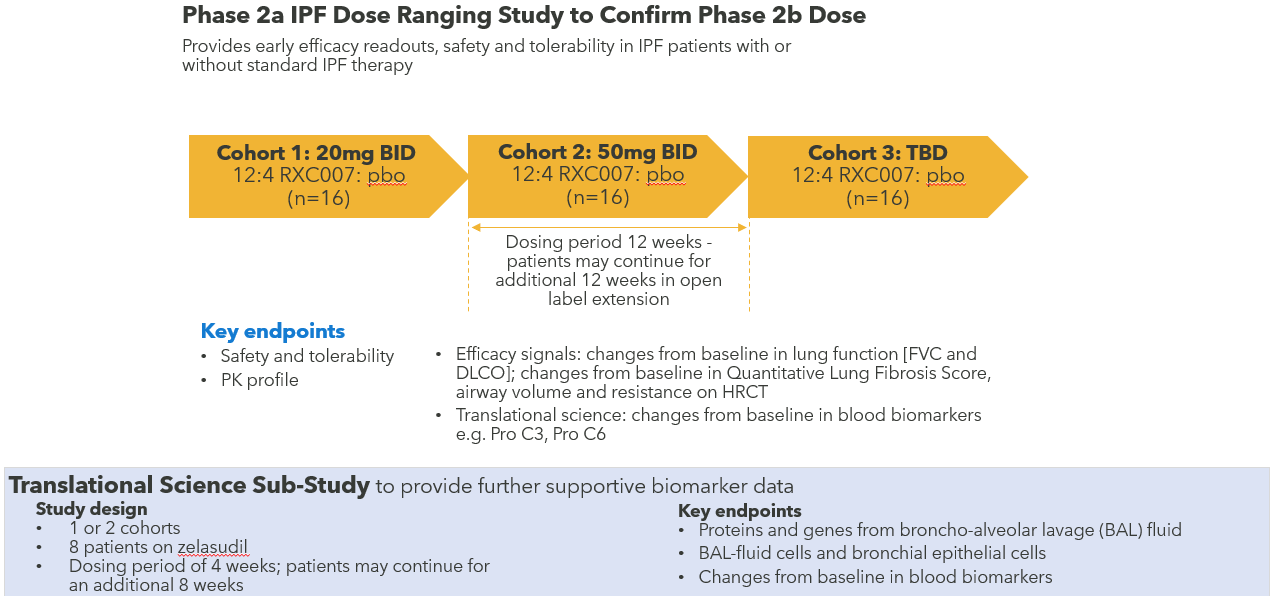
The Phase 2a dose ranging study in IPF provides a safety and tolerability profile with an efficacy signal readout in IPF patients with or without standard therapy. In total, 48 patients participated in the study with baseline demographics and disease characteristics balanced across treatment groups, and in line with historical IPF studies. Patients were randomized in a 3:1 ratio to receive zelasudil or placebo twice daily, for 12 weeks in a double-blind phase at doses of 20mg BID and 50mg BID. In each cohort, patients were permitted to be on either no background antifibrotic therapy or on stable doses of pirfenidone or nintedanib. Upon completing the 12 week double blind treatment period, 35 patients continued into a 12-week open-label extension (OLE) in which placebo patients were able to cross over to zelasudil.
Overview of the Phase 2a data:
- Zelasudil was well tolerated at 12 and 24 weeks both with and without background antifibrotic therapy
- Baseline demographics and disease characteristics were similar across treatment groups and in-line with comparable IPF studies
- Zelasudil demonstrated a numerical reduction in Forced Vital Capacity (FVC) decline at 12 weeks in IPF patients
- No differences in safety by dose, duration of treatment (12 / 24 weeks) or background therapy were observed
- There were no deaths and no treatment related SAE
- No evidence of hypotension and no GI signal was seen
- Circulating biomarker data supports the anti-fibrotic signal observed, including a reduction in CA19-9, CA-125, PRO-C3 and CHI3L1.
For the Phase 2a open-label extension (OLE) of 35 patients:
- Patients who remained on zelasudil benefitted from further stabilisation of FVC decline to 24 weeks
- Stabilisation in lung function was noted in placebo patients who switched to zelasudil
- Biomarker data in OLE was consistent with 12- week data (Note:PRO-C3 was not tested in the OLE).
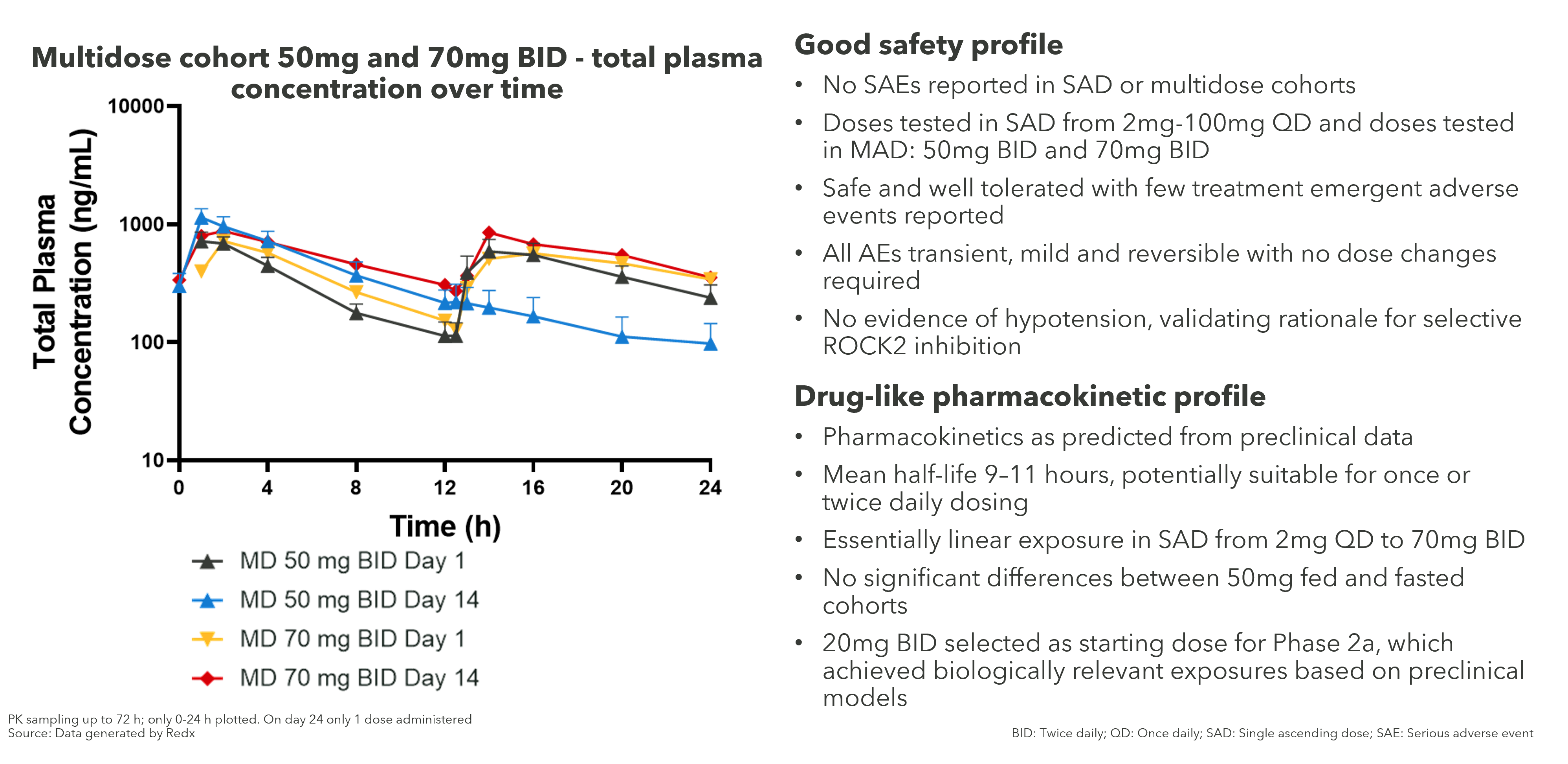
In the Phase 1 study in healthy volunteers:
- Zelasudil confirms good safety and pharmacokinetic profile
- Well tolerated with few treatment emergent adverse events reported
- No evidence of hypotension validating rationale for selective ROCK2 inhibition
- Mean half-life of 9-11 hours potentially suitable for once or twice daily dosing.
Preclinical studies
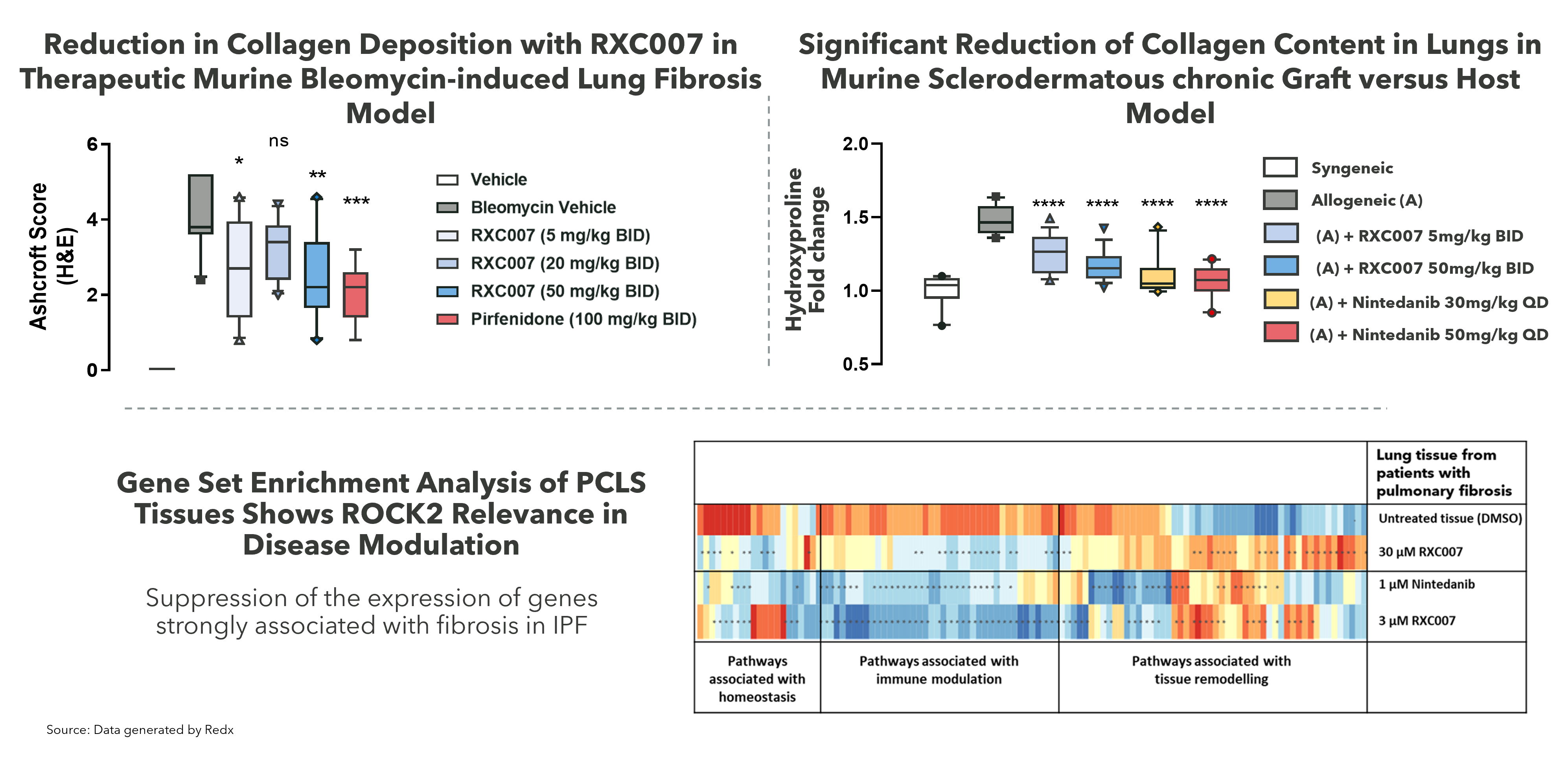
Zelasudil activity in patient tissue as well as in both chemically induced and immune-mediated preclinical models supports the core development plan in IPF and other interstitial lung diseases. Zelasudil was seen to be efficacious in several in vivo preclinical models of fibrosis, including:
- Therapeutic Murine Bleomycin-induced IPF Model
- Therapeutic Murine Sclerodermatous chronic Graft versus Host (immune mediated ILD) model
- Carbon tetrachloride (CCl4)-induced liver fibrosis model
- Human fibrotic lung tissue isolated from resected lung.
Additionally, zelasudil has shown promising results in Therapeutic Murine Pancreatic Cancer Patient Derived Xenograft models, supporting a development plan in cancer-associated fibrosis.
What is the role of fibrosis in Metabolic dysfunction-associated steatohepatitis (MASH)?
Metabolic dysfunction-associated steatohepatitis (MASH) is a disease impacting a growing number of people worldwide, driven by chronic overnutrition and genetic susceptibility factors.
Fibrosis is one of the three main features of MASH, alongside inflammation and steatosis. Liver fibrosis is characterised by the excess accumulation of extracellular matrix (ECM) between liver cells, which limits the ability of hepatocytes to proliferate and is of clinical importance in MASH. The development of severe liver fibrosis is associated with morbidity and mortality.
Therapeutic interventions targeting the progression and reversal of liver fibrosis is a critical readout for improving outcomes in patients which MASH. Direct anti-fibrotic compounds are currently absent in clinical development and have the potential to combine with metabolic targeting agents to enhance efficacy.
The GAN DIO-MASH model is the top ranked model by the LITMUS consortium due to its proximity to the human disease, based on metabolic significance and ability to induce fibrosis. Zelasudil demonstrated weight independent efficacy in the GAN DIO-MASH model, improving NAFLD activity score in a dose dependent manner. Zelasudil’s efficacy was driven through a potentially complementary mechanism to semaglutide, demonstrating only a modest impact on steatosis but having a more significant impact on inflammation. The data highlights zelasudil as a potential complementary combination partner with MASH agents.
What is the role of fibrosis in cancer?
Fibrosis is increasingly recognised to have an important role in the progression of many tumours, and to regulate key cellular interactions within the tumour microenvironment. The effects on the tumour induced by cancer associated fibroblasts (CAFs; the main cells responsible for the scarring process) range from reduced access of chemotherapy/drugs to the tumour to impairment of the body’s anti-tumour immunity. Unsurprisingly, the more severe the fibrosis, the more aggressively the tumour will behave, and the worse the prognosis.
Therapeutic interventions which can reduce fibrotic damage therefore, not only have the potential to directly improve prognosis, but also to enhance the efficacy of other treatment modalities, for example, chemotherapy and immunotherapy.
Data from a pancreatic ductal adenocarcinoma (PDAC) model showed that zelasudil in combination with gemcitabine/Abraxane®1 in metastatic and high-extra cellular matrix (ECM) patient-derived PDAC models, increased survival compared to single agent standard of care alone. Furthermore, data from a chemotherapy-resistant patient derived model in which collagen content is increased upon development of resistance showed that a close analogue of zelasudil, REDX10616, in combination with FOLFIRINOX re-sensitised the tumour to treatment and led to a striking increase in survival.
References
- Clinical Estimates from Hyun 2015, Ley 2012, Raghu 2006
- Patient numbers (diagnosed prevalence) & market size forecast data sourced from Global Data (US, EU5, Japan)
Phase 2a clinical study completed in H1 2025 and the results were presented at the European Respiratory Society (ERS) conference in September 2025.
Zelasudil is a potent, highly selective and orally-active inhibitor that targets Rho-Associated Coiled-Coil Containing Protein Kinase 2 (ROCK2) which sits at a nodal point in cell signalling pathways, central to fibrosis. The role of ROCK2 in a diverse range of cellular processes allows zelasudil to have pleiotropic effects, affecting multiple cell signalling pathways associated with fibrosis. Selective inhibition of ROCK2 has the potential to prevent the hypotensive side effects typically associated with systemic pan-ROCK inhibitors (where both ROCK1 and ROCK2 are inhibited).
Our ROCK2 inhibitor, zelasudil, has demonstrated potential preclinically to be an attractive agent for the treatment of fibrotic indications. Of particular interest, zelasudil has shown preclinical proof-of-concept in immune-mediated models, which supports the development of zelasudil into other interstitial lung diseases beyond IPF, in MASH and other fibrotic indications such as cancer-associated fibrosis. This potential has now been confirmed with anti-fibrotic activity seen in the initial signal searching study. Full data from this study, which includes treatment in some patients up to 24 weeks, was presented at ERS in September 2025.
Zelasudil Development Overview
ROCK2 signalling plays a key role in both the inflammatory component and the tissue remodelling that drives disease progression in many fibrotic conditions. Our approach was to apply our medicinal chemistry expertise to produce a next-generation ROCK2 inhibitor with optimised characteristics including selectivity to improve safety profile and side effects, reduce drug-drug interaction liabilities and to have improved physicochemical properties to achieve increased exposures at lower doses.
Idiopathic pulmonary fibrosis (IPF) is a severe and life-threatening chronic lung condition which is being targeted as the first indication for clinical development. IPF is an orphan with a very poor prognosis similar to many cancers, with life expectancy of 3 to 5 years following diagnosis. 1 IPF affects over 170,000 patients in the US, EU5 and Japan alone, occurring primarily in adults >50 years old.1 Current available treatment options are limited and only slow disease progression without treating the underlying disease.
In 2023, zelasudil was granted orphan drug designation by the FDA as a potential treatment for IPF. Zelasudil has been shown to be well tolerated in a Phase 1 clinical study in healthy volunteers and has recently completed a signal searching Phase 2a clinical programme in IPF patients.
Zelasudil Highlights to date
The Phase 2a dose ranging study in IPF provides a safety and tolerability profile with an efficacy signal readout in IPF patients with or without standard therapy. In total, 48 patients participated in the study with baseline demographics and disease characteristics balanced across treatment groups, and in line with historical IPF studies. Patients were randomized in a 3:1 ratio to receive zelasudil or placebo twice daily, for 12 weeks in a double-blind phase at doses of 20mg BID and 50mg BID. In each cohort, patients were permitted to be on either no background antifibrotic therapy or on stable doses of pirfenidone or nintedanib. Upon completing the 12 week double blind treatment period, 35 patients continued into a 12-week open-label extension (OLE) in which placebo patients were able to cross over to zelasudil.
Overview of the Phase 2a data:
- Zelasudil was well tolerated at 12 and 24 weeks both with and without background antifibrotic therapy
- Baseline demographics and disease characteristics were similar across treatment groups and in-line with comparable IPF studies
- Zelasudil demonstrated a numerical reduction in Forced Vital Capacity (FVC) decline at 12 weeks in IPF patients
- No differences in safety by dose, duration of treatment (12 / 24 weeks) or background therapy were observed
- There were no deaths and no treatment related SAE
- No evidence of hypotension and no GI signal was seen
- Circulating biomarker data supports the anti-fibrotic signal observed, including a reduction in CA19-9, CA-125, PRO-C3 and CHI3L1.
For the Phase 2a open-label extension (OLE) of 35 patients:
- Patients who remained on zelasudil benefitted from further stabilisation of FVC decline to 24 weeks
- Stabilisation in lung function was noted in placebo patients who switched to zelasudil
- Biomarker data in OLE was consistent with 12- week data (Note:PRO-C3 was not tested in the OLE).
In the Phase 1 study in healthy volunteers:
- Zelasudil confirms good safety and pharmacokinetic profile
- Well tolerated with few treatment emergent adverse events reported
- No evidence of hypotension validating rationale for selective ROCK2 inhibition
- Mean half-life of 9-11 hours potentially suitable for once or twice daily dosing.
Preclinical studies
Zelasudil activity in patient tissue as well as in both chemically induced and immune-mediated preclinical models supports the core development plan in IPF and other interstitial lung diseases. Zelasudil was seen to be efficacious in several in vivo preclinical models of fibrosis, including:
- Therapeutic Murine Bleomycin-induced IPF Model
- Therapeutic Murine Sclerodermatous chronic Graft versus Host (immune mediated ILD) model
- Carbon tetrachloride (CCl4)-induced liver fibrosis model
- Human fibrotic lung tissue isolated from resected lung.
Additionally, zelasudil has shown promising results in Therapeutic Murine Pancreatic Cancer Patient Derived Xenograft models, supporting a development plan in cancer-associated fibrosis.
What is the role of fibrosis in Metabolic dysfunction-associated steatohepatitis (MASH)?
Metabolic dysfunction-associated steatohepatitis (MASH) is a disease impacting a growing number of people worldwide, driven by chronic overnutrition and genetic susceptibility factors.
Fibrosis is one of the three main features of MASH, alongside inflammation and steatosis. Liver fibrosis is characterised by the excess accumulation of extracellular matrix (ECM) between liver cells, which limits the ability of hepatocytes to proliferate and is of clinical importance in MASH. The development of severe liver fibrosis is associated with morbidity and mortality.
Therapeutic interventions targeting the progression and reversal of liver fibrosis is a critical readout for improving outcomes in patients which MASH. Direct anti-fibrotic compounds are currently absent in clinical development and have the potential to combine with metabolic targeting agents to enhance efficacy.
The GAN DIO-MASH model is the top ranked model by the LITMUS consortium due to its proximity to the human disease, based on metabolic significance and ability to induce fibrosis. Zelasudil demonstrated weight independent efficacy in the GAN DIO-MASH model, improving NAFLD activity score in a dose dependent manner. Zelasudil’s efficacy was driven through a potentially complementary mechanism to semaglutide, demonstrating only a modest impact on steatosis but having a more significant impact on inflammation. The data highlights zelasudil as a potential complementary combination partner with MASH agents.
What is the role of fibrosis in cancer?
Fibrosis is increasingly recognised to have an important role in the progression of many tumours, and to regulate key cellular interactions within the tumour microenvironment. The effects on the tumour induced by cancer associated fibroblasts (CAFs; the main cells responsible for the scarring process) range from reduced access of chemotherapy/drugs to the tumour to impairment of the body’s anti-tumour immunity. Unsurprisingly, the more severe the fibrosis, the more aggressively the tumour will behave, and the worse the prognosis.
Therapeutic interventions which can reduce fibrotic damage therefore, not only have the potential to directly improve prognosis, but also to enhance the efficacy of other treatment modalities, for example, chemotherapy and immunotherapy.
Data from a pancreatic ductal adenocarcinoma (PDAC) model showed that zelasudil in combination with gemcitabine/Abraxane®1 in metastatic and high-extra cellular matrix (ECM) patient-derived PDAC models, increased survival compared to single agent standard of care alone. Furthermore, data from a chemotherapy-resistant patient derived model in which collagen content is increased upon development of resistance showed that a close analogue of zelasudil, REDX10616, in combination with FOLFIRINOX re-sensitised the tumour to treatment and led to a striking increase in survival.
References
- Clinical Estimates from Hyun 2015, Ley 2012, Raghu 2006
- Patient numbers (diagnosed prevalence) & market size forecast data sourced from Global Data (US, EU5, Japan)
Zelasudil is a next generation ROCK2 selective inhibitor with potential to improve safety and therapeutic outcomes
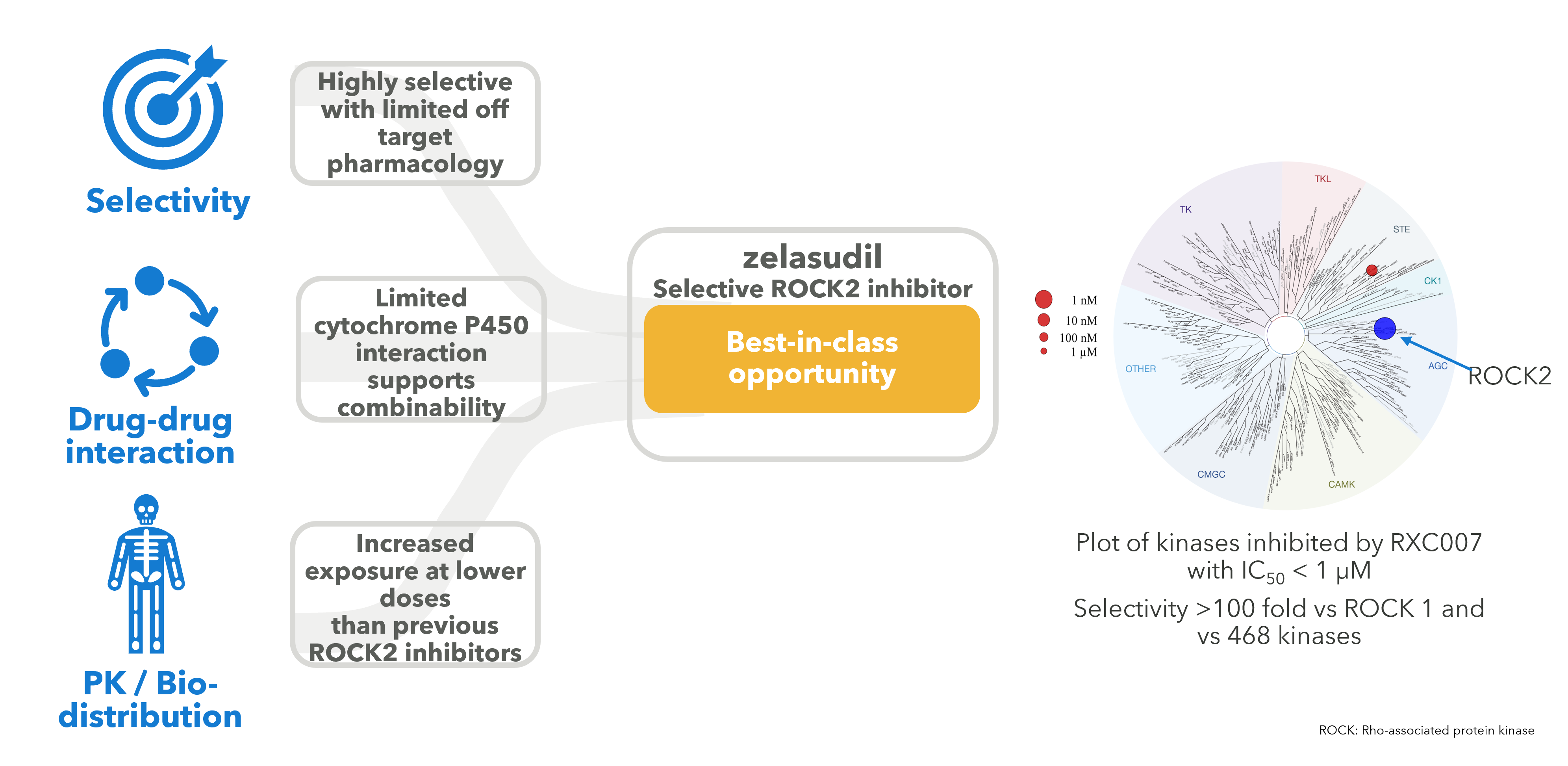
Our approach in the ROCK2 project was to apply our medicinal chemistry expertise to produce a next generation ROCK2 inhibitor with improved characteristics including improved selectivity to improve safety and side effects, to have lower cytochrome P450 actions to reduce drug-drug interaction liabilities and to have improved physicochemical properties to achieve increased exposures at lower doses.
ROCK2 is an intracellular kinase with multiple cellular functions. ROCK2 sits at a nodal point in a cell signalling pathway, believed to be central to fibrosis
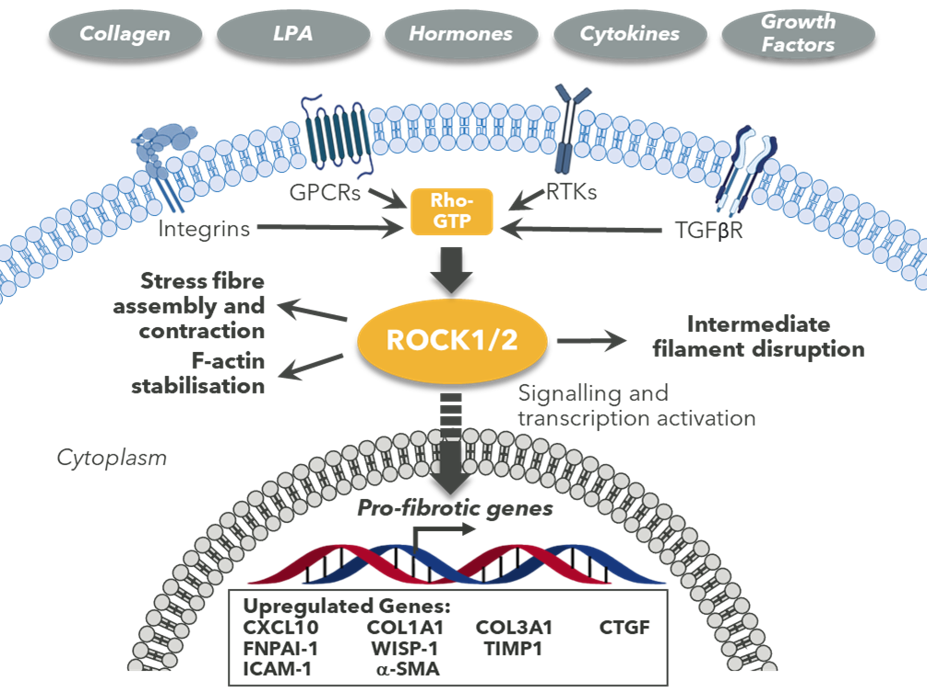
ROCK2 signalling plays a key role in both the inflammatory component and the tissue remodelling that drives disease progression in many fibrotic conditions. ROCK2 expression and activity have been shown to be upregulated in acute inflammatory injury and in chronic diseases such as diabetes, metabolic syndrome and IPF. Selective inhibition of ROCK2 has the potential to prevent the hypotensive side effects typically associated with systemic pan-ROCK inhibitors (where both ROCK1 and ROCK2 are inhibited).
Anti-fibrotic and significantly increases survival in combination with chemotherapy and anti-PD1 in pancreatic cancer models
Data from a pancreatic ductal adenocarcinoma (PDAC) model showed that zelasudil in combination with gemcitabine/Abraxane®1 in metastatic and high-extra cellular matrix (ECM) patient-derived PDAC models, increased survival compared to single agent standard of care alone.